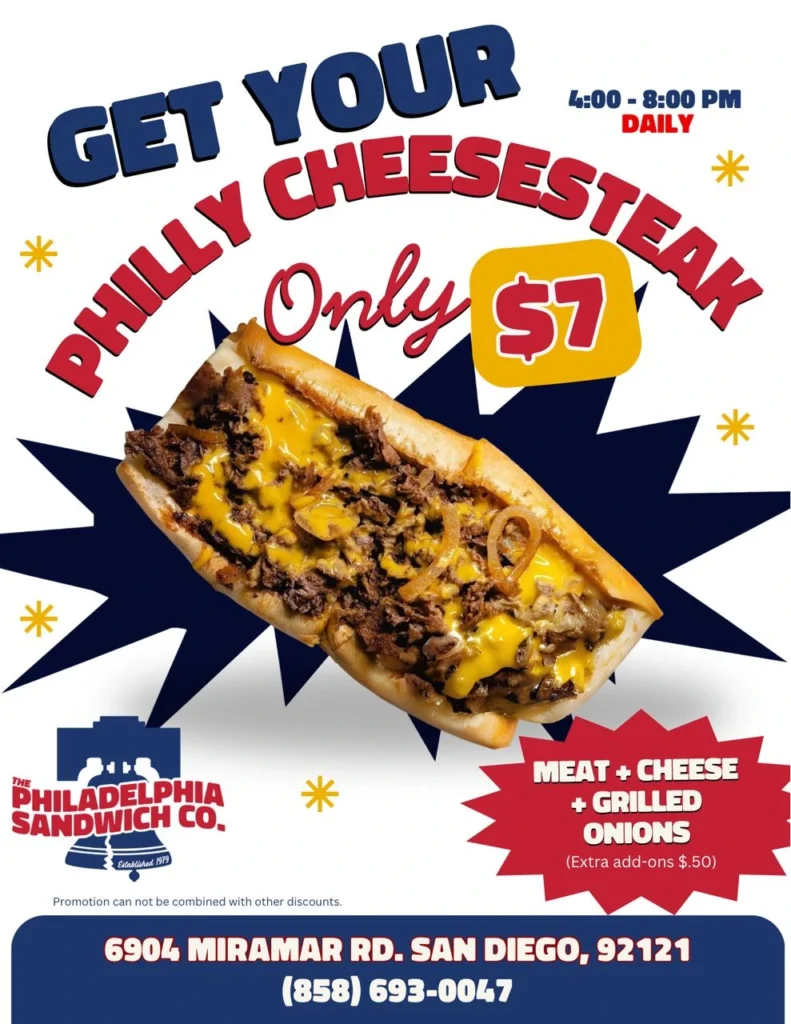
Order authentic Philly Cheesesteak with us! We offer catering & delivery! Please call: 858-693-0047 for orders!


When people search for how to season Philly cheesesteak meat, they often expect a complex spice blend. But authentic Philadelphia cheesesteaks rely on something far simpler — and far more intentional. Traditional cheesesteak meat is seasoned primarily with kosher salt and freshly ground black pepper. That’s it. The purpose isn’t minimalism for its own sake. It’s that ribeye quality, paper-thin slicing, and high-heat flat-top cooking already create deep savory flavor through real meat chemistry.
If you’ve ever wondered why some cheesesteaks taste bold and satisfying while others taste flat, the answer is usually not “more seasoning.” It’s almost always heat, timing, and restraint.
At Philadelphia Sandwich Co in San Diego, we follow classic East Coast preparation philosophy — where seasoning supports the beef instead of replacing it. Guests from Sorrento Valley, La Jolla, Carmel Valley, Torrey Pines, Mira Mesa, University City, Del Mar, and Rancho Peñasquitos sometimes expect a heavy spice profile. The authentic method surprises people because it is simple, but the flavor is not.
A cheesesteak is not a spice-driven sandwich. It is beef-forward. The star is ribeye steak, valued for intramuscular fat (marbling) that melts quickly on a hot grill and bastes the meat from within. When ribeye is sliced thin and cooked correctly, it doesn’t need help from marinades or spice rubs. Adding heavy seasoning often masks the very flavor that makes the sandwich “Philly” in the first place.
This is why authentic cheesesteaks feel clean and direct. The richness comes from beef and heat. The seasoning is there to sharpen and amplify, not to change the identity of the meat.
Ribeye performs differently from lean cuts because fat carries flavor. When ribeye hits a hot flat-top grill, a few important reactions happen fast, and together they create the signature cheesesteak depth people associate with great shops.
First, fat rendering happens immediately. Marbling melts and coats meat fibers, boosting tenderness and mouthfeel. That richness reads as “seasoned,” even when it isn’t heavily spiced.
Next comes the Maillard reaction, which is the browning process that occurs when amino acids and sugars react under high heat. This is what produces the slightly crisp, caramelized edges and the savory “griddle flavor” that defines cheesesteak meat.
Finally, there’s protein denaturation. Heat restructures muscle proteins. In thick steak cuts, this can create toughness if you overcook. In a cheesesteak, thin slicing keeps this under control, allowing meat to firm slightly while staying tender.
If your grill isn’t hot enough, you don’t get these reactions properly — and no spice blend can replace what high heat does naturally.
Salt is not just about flavor. It is functional. On thinly sliced cheesesteak meat, salt helps create the conditions that make ribeye taste deeper and more satisfying.
When applied just before cooking, salt draws a small amount of moisture to the surface. That surface moisture then evaporates quickly on high heat, allowing browning to happen faster and more evenly. Salt also increases the perception of savory flavor by amplifying the natural glutamates already present in beef.
Kosher salt is usually preferred because the crystal size is easier to control. It distributes more evenly and dissolves predictably, which matters when cooking paper-thin slices quickly.
The key is timing. If you salt too early, you risk pulling moisture out prematurely. For cheesesteaks, you want salt to work at the grill, not in the refrigerator.
Freshly ground black pepper adds something salt cannot: aromatic complexity. Pepper contains piperine (its mild heat compound) and aromatic oils that bloom under heat. That warmth balances ribeye richness and melted cheese without turning the sandwich into a spice-forward dish.
Pre-ground pepper loses its aromatic punch over time. Fresh cracking makes a noticeable difference in how “alive” the meat tastes, especially when the rest of the seasoning is intentionally minimal.
For the most authentic result, pepper should be used as a supporting layer — not a dominant one.
Authentic Philly cheesesteaks can include subtle enhancements, but the rule is simple: the moment the sandwich starts tasting “marinated,” it stops tasting traditional.
Garlic can be used sparingly. A tiny amount of garlic powder may add background depth, and some kitchens use it for consistency. Fresh garlic can work, but it becomes overpowering quickly and shifts the flavor profile toward Italian or deli-style sandwiches rather than classic cheesesteaks.
Worcestershire sauce is another optional enhancer. Because it contains anchovies, vinegar, molasses, and spices, it brings umami compounds that can deepen savory perception. The key is using it lightly during cooking so it remains a background note. Too much introduces sweetness and acidity that compete with the beef and pull the sandwich away from the Philly profile.
These additions are best treated like accents — not foundations.
A lot of confusion comes from the difference between seasoning and marinading.
Seasoning is surface-level, applied right before or during cooking, and intended to amplify natural meat flavor. In cheesesteaks, seasoning is basically salt and pepper, with optional subtle background additions.
Marinade is something else entirely. Marinades involve soaking meat in liquid for hours, often with acids (vinegar, citrus), sugars, oils, and strong spices. Marinades change texture, penetrate deeper, and introduce dominant flavors.
Traditional cheesesteak meat is not marinated because ribeye already has built-in tenderness and richness. Acid-based marinades can alter the texture and create flavors that feel closer to stir-fry or grilled steak strips than classic cheesesteak meat.
If you see recipes calling for soy sauce, brown sugar, heavy spice mixes, or long marinades, you’re looking at a modern reinterpretation — not traditional Philadelphia style.
Cheesesteaks are cooked fast and hot. Thin slices of ribeye often finish in under two minutes. Because the cook time is so short, seasoning must be applied evenly and lightly, and the grill must be hot enough to sear immediately.
If the grill is too cool, the meat steams instead of searing. When meat steams, you lose browning, the flavor stays muted, and the sandwich tastes “underseasoned” even if you used plenty of salt. In many cases, what people interpret as “needs more seasoning” is actually “needs more heat.”
When the heat is correct, salt and pepper feel powerful. When the heat is wrong, even the best seasoning feels wasted.
Bland cheesesteaks usually don’t need a bigger spice blend. They need better execution.
Insufficient salt is one of the most common causes, but low grill temperature is just as common. Overcrowding the cooking surface traps moisture and prevents browning. Using lean meat without proper slicing reduces richness. Pre-cooked deli roast beef lacks the fresh sear that defines authentic cheesesteak flavor.
The fix is almost always the same: hotter surface, thinner slices, better timing, and restrained seasoning applied at the right moment.
Cheese contributes salt, fat, and texture. Provolone adds mild tang. American cheese melts smoothly and evenly. Cheez Whiz creates a creamy, sauce-like consistency and increases perceived saltiness.
Because cheese already contains sodium, the beef should not be aggressively salted. The goal is a cohesive bite where beef leads, cheese supports, and the roll holds structure. Seasoning has to be calibrated to the full sandwich — not just the meat on the grill.
You can — but carefully, and with realistic expectations. A pinch of smoked paprika, a touch of white pepper, or a small amount of parsley can add subtle personality. These approaches can taste good, especially in modern “Philly-style” sandwiches.
But the closer you stay to salt and pepper, the closer you remain to traditional Philly identity. If seasoning becomes the dominant flavor, the sandwich stops tasting like a cheesesteak and starts tasting like a seasoned steak sandwich.
Authenticity is not fragile — but it does have boundaries.
Start with ribeye sliced paper-thin, ideally while partially frozen for clean slicing. Preheat a flat-top or griddle until it is hot enough to sear immediately.
Season lightly with kosher salt right before the meat touches the surface. Add freshly cracked black pepper during cooking, often after the first turn so the aroma stays vibrant. Chop and fold the meat as it browns to create the classic texture.
If you use Worcestershire, keep it minimal and add it during cooking — not as a soak. Then melt the cheese directly into the seasoned meat on the grill so it integrates before going into the roll.
The result should be juicy, savory, and balanced — never heavily spiced.
At Philadelphia Sandwich Co, our approach reflects East Coast authenticity: thin-sliced ribeye, balanced salt and pepper, high-heat flat-top cooking, proper cheese integration, and fresh hoagie rolls. We focus on technique and ingredient quality rather than heavy seasoning blends.
Because when the beef is right, it doesn’t need to be hidden.
For an authentic Philly cheesesteak, the best seasoning is:
Kosher salt. Freshly ground black pepper. Optional subtle Worcestershire.
No marinades. No heavy rubs. No overpowering spice blends.
Let the ribeye, the heat, and the technique do the work — and the flavor will come through exactly the way Philadelphia intended.