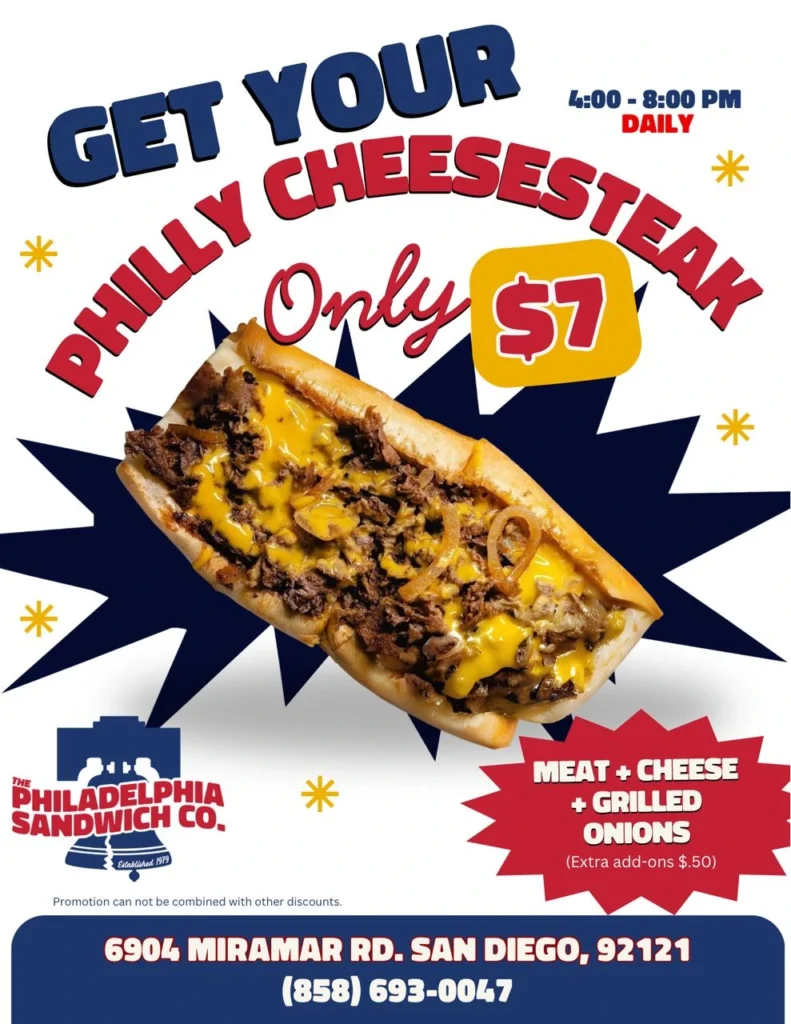
Order authentic Philly Cheesesteak with us! We offer catering & delivery! Please call: 858-693-0047 for orders!


A Blackstone Philly cheesesteak is one of the closest home methods for recreating what defines the original sandwich: thin-sliced ribeye seared on a wide, hot flat-top surface, chopped after browning, blended with softened onions, folded with melted cheese, and loaded into a soft hoagie roll that absorbs juices without collapsing.
The process sounds simple, but every step depends on heat control and ingredient balance. Ribeye needs enough marbling to stay tender once chopped. The griddle must be hot enough to sear instead of steam. Cheese must melt into the meat rather than sit on top. The roll must compress around the filling without tearing or turning soggy.
When those elements work together, the result isn’t just steak and cheese on bread. It’s a sandwich where meat, cheese, and bread behave as a single structure. A Blackstone griddle works especially well because it mirrors the wide steel flat tops used in traditional Philadelphia cheesesteak shops.
A cheesesteak was built for a flat-top. It depends on wide, even heat rather than the concentrated flames of a grill or the confined shape of a skillet. That wide surface allows moisture to evaporate quickly and lets browning develop in seconds.
San Diego has plenty of steak sandwiches, but the original Philadelphia cheesesteak is defined by a specific method: ribeye cooked on a hot flat top, chopped only after browning begins, then folded with cheese so the filling lifts in one motion.
At Philadelphia Sandwich Co., we stick to that traditional approach at our Miramar Road location. If you want to see how the classic sandwiches are built and what cheeses we use daily, explore our Official Menu.
A proper Blackstone cheesesteak succeeds because each component does a specific job. The meat provides richness through rendered fat, the onions add controlled sweetness, the cheese binds the filling, and the roll contains everything without collapsing.
A proper Blackstone Philly cheesesteak recipe starts with ribeye because of how the meat behaves under high heat. Ribeye contains intramuscular fat known as marbling. As it cooks, that fat melts gradually, coats the meat, and keeps chopped beef tender once cheese is added.
Leaner cuts like sirloin or round behave differently. Without enough fat, moisture escapes quickly and the chopped filling can feel dry or crumbly instead of cohesive.
For easier slicing, place ribeye in the freezer for 30 to 45 minutes before cutting. This firms the meat so you can slice thin and evenly while keeping the texture intact.
Onions are common in a cheesesteak, though optional. When used, slice them thin and soften them on the griddle until translucent and mildly sweet. Deep caramelization isn’t necessary and can introduce bitterness that disrupts balance.
Once softened, fold onions into the chopped ribeye during the final minute of cooking. Their moisture blends with rendered fat, creating the savory aroma that defines cheesesteak filling without turning it watery.
Three classic cheeses are most associated with cheesesteaks: Cheese Whiz, white American, and provolone. Each melts differently, but the key is not the cheese choice. The key is integration.
After ribeye and onions finish cooking, gather the mixture into a compact mound. Lay cheese slices directly over the top and allow them to soften briefly. Then fold the meat inward over the cheese while pressing gently. The melted cheese should bind the chopped beef so the filling lifts in one cohesive scoop.
If using Cheese Whiz, warm it separately and apply it immediately before loading the sandwich. The goal is an even coating that supports the beef rather than overpowering it.
Bread is where many homemade cheesesteaks fail. A proper roll must balance softness and strength. The interior should compress easily when bitten, while the exterior must hold up to hot juices without collapsing.
Bread that is too crusty can push filling out the back during the first bite. Bread that is too soft can disintegrate after absorbing steam and rendered fat.
Warm the roll briefly on the griddle to increase flexibility. This is not meant to hard-toast the bread. It is meant to make the roll pliable enough to wrap around the filling without cracking.
8 oz thin-sliced ribeye
1/2 small onion, thinly sliced
2–3 slices white American or provolone
1 soft hoagie roll
Light oil
Salt
The entire process should take only a few minutes when heat and prep are correct.
If the meat turns gray instead of browned, the griddle wasn’t hot enough and moisture pooled instead of evaporating.
If the filling becomes dry or crumbly, the meat was too lean, chopped excessively, or cooked too long after browning.
If the roll falls apart, the bread likely lacked structure or absorbed too much steam from overfilled or overly wet meat.
If the cheese slides off instead of binding, it wasn’t folded into the meat properly while hot.
Most issues trace back to the same fundamentals: heat, fat content, and technique.
Traditional cheesesteak shops stick to ribeye, flat-top cooking, and specific bread behavior because repetition reveals what works best. Ribeye maintains moisture under high heat. The right roll compresses without collapsing. Cheese must integrate into the filling rather than sit on top.
Authenticity isn’t nostalgia. It’s consistency built through experience, where small changes can alter the entire sandwich.
Medium-high to high is the standard. The surface should be hot enough that moisture evaporates quickly and browning begins within the first 20 to 30 seconds.
Ribeye is the best choice because marbling renders under high heat and keeps the chopped filling tender and cohesive.
Cheese Whiz, white American, and provolone are the classic options. The key is melting and folding the cheese into the meat so it binds the filling.
Most often, browning never developed because the surface wasn’t hot enough or the meat was stirred too early. Browning is where depth comes from.
Outdoor griddles have made it easier than ever to recreate flat-top cheesesteaks at home, especially across San Diego. When you focus on high heat, properly sliced ribeye, classic cheese, and a soft hoagie roll, you’re following a process refined over decades.
For more than 40 years, The Philadelphia Sandwich Co. has brought traditional East Coast sandwich craftsmanship to San Diego from its Miramar Road location. Cheesesteaks are prepared the way they were meant to be: ribeye cooked on a hot flat-top grill, classic cheese melted directly into the meat, and hoagie rolls chosen for their ability to hold juices without falling apart.
The Philadelphia Sandwich Co.
6904 Miramar Rd. Suite 207
San Diego, CA
Phone: (858) 693-0047