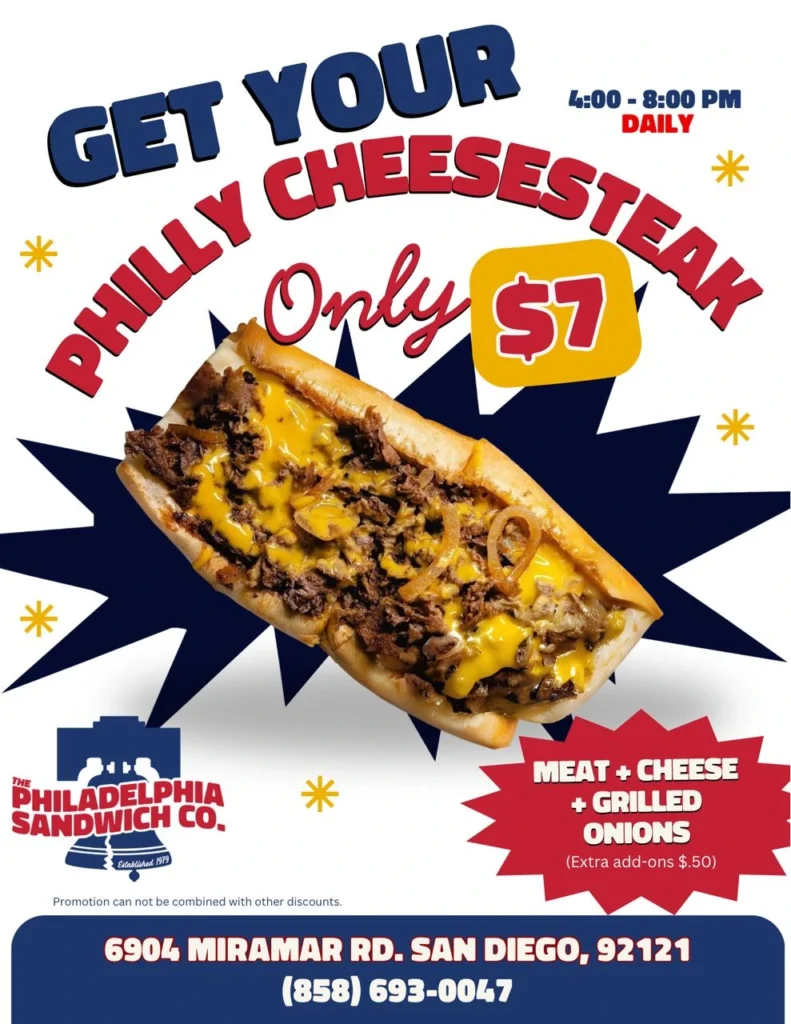
Order authentic Philly Cheesesteak with us! We offer catering & delivery! Please call: 858-693-0047 for orders!


If you’ve ever searched “what is a hoagie” or “what is a hoagie sandwich,” you’ve probably seen the same oversimplified answer: “It’s just a sub.” But in Philadelphia, a hoagie is not a generic label. It’s a regional sandwich standard built around bread texture, deliberate layering, and moisture control that keeps the sandwich balanced from first bite to last.
A hoagie is a Philadelphia-born long sandwich served on a soft, slightly chewy roll with a thin, flexible crust. The classic build is Italian deli meats, provolone, shredded lettuce, tomato, onion, and a restrained splash of oil and vinegar. It isn’t defined by length alone. It’s defined by how the roll compresses, how the fillings distribute, and how the dressing brightens without soaking the bread.
At Philadelphia Sandwich Co. in San Diego, we keep that hoagie discipline alive. The goal isn’t a messy pile of deli meat. The goal is a sandwich that holds together, eats clean, and delivers the same flavor sequence across the entire roll—exactly the way it’s expected in the Philadelphia region.
Choosing the right sandwich build is less about ingredients and more about structure. Here’s why a hoagie is its own category—and why the details matter:
San Diego has no shortage of long sandwiches. What’s harder to find is the Philadelphia-style build that makes a hoagie behave the way it should. In Philly, the bread is softer, the lettuce is shredded, the oil and vinegar are restrained, and the entire sandwich is assembled to compress cleanly.
That’s the standard we follow at Philadelphia Sandwich Co.—because “hoagie” isn’t just a word. It’s a format with rules.
You can explore our full sandwich lineup on our Official Menu.
The word “hoagie” is rooted in the Philadelphia region and carries a strong local identity. One widely repeated origin story traces the term to Hog Island, a shipyard area in Philadelphia during World War I. Italian immigrant workers reportedly brought long sandwiches filled with meats and cheese for lunch, which became informally known as “Hog Island sandwiches.” Over time, that nickname is believed to have shortened into “hoagie.”
Whether every detail is perfectly documented matters less than the regional truth behind it. The hoagie was built in Philadelphia, normalized there, and refined there. Local shops repeated the same format—soft long roll, layered meats, provolone, shredded lettuce, oil and vinegar—until it became a recognizable standard.
That’s why the word still signals something specific. In Philadelphia, ordering a “sub” can sound generic. Ordering a hoagie signals you know the local build.
At the simplest level, a hoagie sandwich is a long roll filled with cold cuts, cheese, vegetables, and a light dressing. But hoagies aren’t defined by ingredients alone. They’re defined by proportion and assembly.
A properly built hoagie is layered with intention. The meats are sliced thin and arranged across the entire length of the roll so every bite tastes consistent. The cheese is placed to support the meats instead of dominating them. The lettuce is shredded finely so it spreads evenly and adds crispness without creating bulky pockets.
Tomatoes are sliced thin and controlled so they don’t flood the bread. Onions add sharpness but stay balanced. Oil and vinegar are applied sparingly—enough to brighten the meats and cut richness without saturating the crumb.
When this is done correctly, a hoagie compresses gently when you bite into it. The roll yields slightly. The filling settles instead of sliding. The hinge holds. Nothing spills out the back. The sandwich remains cohesive and clean.
That’s the hoagie standard: harmony instead of excess.
The hoagie roll is not just “bread for a long sandwich.” It is a functional component designed for this exact format. A proper hoagie roll is long and lightly domed on top, with a thin crust and a soft interior crumb that compresses easily.
The crust should not be thick or crackly like a baguette. It should bend slightly when pressed and spring back without splitting. Inside, the crumb should feel airy but structured—pliable when warmed, but strong enough to support layered meats and dressing.
Most hoagie rolls are sliced using a hinge cut, meaning one side remains connected. This isn’t just tradition—it’s mechanical. The hinge keeps fillings contained, helps the roll compress evenly, and prevents the sandwich from splitting into two unstable halves.
Bread is not secondary in a hoagie. It’s the part that makes everything else behave.
Outside of Pennsylvania, people often say “hoagie bun,” but in practice they’re referring to the same thing as a hoagie roll. The word “bun” can cause confusion because it suggests something round and soft like a hamburger bun.
A hoagie bun is elongated, structured, and built to carry layered fillings. Language varies by region, but the requirements remain the same: thin crust, soft crumb, hinge cut, and enough strength to hold moisture without turning soggy.
A traditional Italian hoagie is a classic Philadelphia-style build centered on cured meats, provolone, crisp vegetables, and oil-and-vinegar dressing.
Most versions include Genoa salami, deli ham, and capicola, layered evenly across the roll. Provolone adds mild sharpness. Shredded lettuce provides crunch and even distribution, while thin tomato slices and red onion add freshness and bite. Banana peppers are often included for acidity and heat.
The dressing is where hoagie discipline really shows. Olive oil and red wine vinegar should be applied lightly, sometimes finished with a pinch of dried oregano. Too much oil saturates the bread. Too much vinegar overpowers the meats. Too many wet vegetables turn the sandwich sloppy.
When built correctly, the flavor sequence is clear. Savory meats lead. Vinegar adds brightness. Vegetables refresh. The roll absorbs just enough moisture to stay cohesive, not soggy.
This question comes up constantly because the words are often used interchangeably. The cleanest way to understand it is that “sub” is the big umbrella, and “hoagie” is a regional style underneath it.
A “sub” (short for submarine sandwich) can be hot or cold, built on many types of long bread, and topped with everything from mayo-heavy sauces to specialty spreads. The term is broad, national, and flexible.
A hoagie refers to a Philadelphia-area standard with recognizable habits. The bread is typically softer and more flexible. The build emphasizes even layering rather than tall piles. Oil and vinegar are traditional and used with restraint. The hinge cut helps the sandwich compress and hold together.
All hoagies fit under the broad idea of a sub. Not all subs follow hoagie standards. The difference is regional identity and assembly discipline.
A Wawa Italian hoagie typically includes salami, ham, and capicola paired with provolone and standard toppings such as shredded lettuce, tomato, onion, oil, vinegar, and seasonings.
While it’s produced at scale, it still reflects the familiar Philadelphia-style structure: layered meats, provolone, shredded lettuce, and a bright oil-and-vinegar finish. The exact ratios may vary from independent sandwich shops, but the framework follows the regional model that made the hoagie recognizable in the first place.
A cheesesteak hoagie blends two Philadelphia traditions: the hot cheesesteak and the cold hoagie.
It begins with thin-sliced beef cooked quickly on a hot flat top and integrated with melted cheese. After the hot filling is placed into the roll, cold toppings like shredded lettuce and tomato are added on top.
That combination creates contrast: warm, savory chopped beef against cool, crisp vegetables. It’s a different experience than a traditional cheesesteak, and it requires careful moisture control. The roll must absorb steam from the hot meat while supporting fresh toppings without becoming soggy.
Some purists prefer cheesesteaks without lettuce and tomato. Others enjoy the added freshness. Either way, the roll still has to do its job: compress, contain, and hold structure.
If you want hoagie structure instead of a sloppy long sandwich, these fundamentals matter:
At Philadelphia Sandwich Co., hoagies are built with the same discipline that made them famous in the Philly region.
A hoagie is a Philadelphia-style version of a sub. The bread texture, dressing style, and assembly discipline distinguish it.
A hoagie roll has a thin, flexible crust and a soft crumb that compresses easily. It’s designed to manage moisture and hold layered fillings without breaking.
A cheesesteak is hot beef and melted cheese. A cheesesteak hoagie adds cold toppings like lettuce and tomato after the hot filling goes into the roll.
Traditionally, hoagies use a light application of olive oil and red wine vinegar, sometimes finished with oregano.
The hoagie endures because it relies on balance rather than extremes. It doesn’t depend on heavy sauces or novelty flavors. It depends on proper bread, disciplined layering, and controlled dressing that keeps the sandwich cohesive from first bite to last.
For more than 40 years, The Philadelphia Sandwich Co. has prepared authentic hoagies and cheesesteaks using disciplined technique, carefully layered meats, and soft rolls chosen for the right structure and bite. From traditional Italian hoagies finished with oil and vinegar to cheesesteak hoagies built for hot-and-cold contrast, structure and regional authenticity guide every sandwich at our Miramar Road location.
Philadelphia Sandwich Co.
6904 Miramar Rd. Suite 207
San Diego, CA
Phone: (858) 693-0047
Philadelphia Sandwich Co. — Real Philly. Real Ingredients. Real San Diego Favorite.