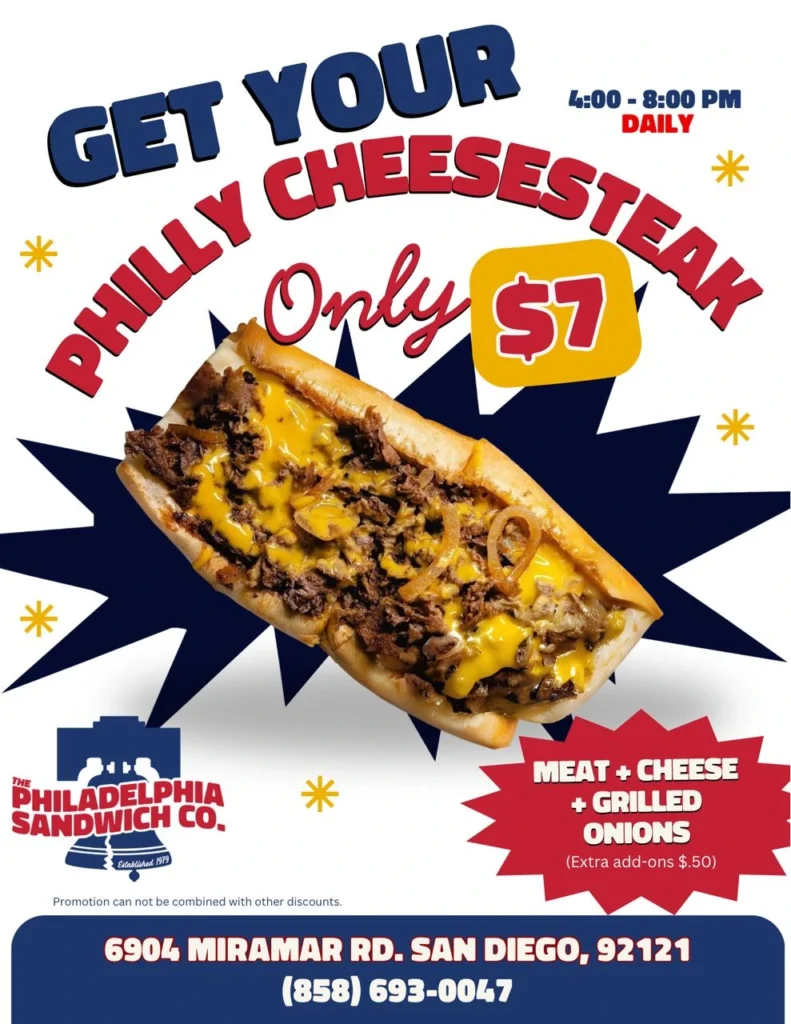
Order authentic Philly Cheesesteak with us! We offer catering & delivery! Please call: 858-693-0047 for orders!


Hoagie rolls used for Philly cheesesteaks are designed for one purpose: supporting hot chopped ribeye and melted cheese without collapsing. The best rolls are soft on the inside with a thin, flexible crust that compresses easily when bitten while still maintaining enough strength to hold the sandwich together.
Traditional Philadelphia cheesesteak shops rely on a very specific style of bread that evolved alongside the sandwich itself. These rolls are not crust-heavy artisan loaves. They are balanced sandwich rolls that absorb meat juices gradually while maintaining their structure. When the bread is correct, the sandwich feels cohesive. The meat, cheese, and bread move together during each bite rather than competing against one another.
Understanding hoagie rolls for Philly cheesesteaks means understanding how bread interacts with heat, fat, and moisture. When the bread is wrong—too crusty, too dense, or too fragile—the entire structure of the cheesesteak begins to fail.
A cheesesteak is built like a system. Ribeye produces heat, rendered fat, and steam on the flat top. Cheese melts into the chopped meat and adds cohesion. The roll has to accept that heat and moisture without breaking apart, while still compressing cleanly so the sandwich bites evenly.
If the roll cannot do these jobs, the cheesesteak stops behaving like a cheesesteak.
The cheesesteak originated in Philadelphia, a city with a long tradition of Italian bakeries producing long sandwich rolls for neighborhood lunch counters. Those bakeries supplied bread designed specifically for hot sandwiches filled with grilled meats.
Unlike crust-heavy European breads, Philadelphia-style hoagie rolls were built for practicality. Vendors needed bread that could hold hot fillings while remaining soft enough to bite through quickly during a busy lunch hour. Over time, a distinctive roll style developed across the city: thin, flexible crust and a soft interior crumb with enough structure to carry meat and cheese.
That bread style worked perfectly for cheesesteaks. Thinly sliced ribeye cooked on a flat-top grill releases rendered fat and steam. The bread must absorb some of that moisture without disintegrating, and it must compress around the filling without forcing the meat out of the back of the sandwich.
Because of this, the roll is not just a container. It is a structural component of the sandwich.
The best cheesesteak rolls share the same performance traits. They are built to cooperate with the filling rather than fight it.
The interior crumb should feel airy but not fragile. Small air pockets keep the bread soft, while enough structure remains to support the weight of hot chopped ribeye and melted cheese. A crumb that is too delicate collapses quickly. A crumb that is too dense makes the sandwich feel heavy and stiff.
The crust should stay thin and pliable rather than crunchy. Thick crust bread resists compression and can fracture when bitten, which pushes the filling forward and disrupts the sandwich. A proper hoagie roll bends and compresses with the meat and cheese.
A cheesesteak brings heat, steam, rendered fat, and melted cheese into the bread. A proper roll absorbs a portion of that moisture gradually. The crumb softens slightly as the sandwich is eaten while the outer structure remains intact. That balance keeps the cheesesteak stable from first bite to last.
Ribeye is the traditional cheesesteak meat because of its marbling. When cooked on a hot flat top, that fat renders and coats the chopped beef, creating the glossy mixture that defines a proper filling. That mixture carries both heat and moisture into the roll.
A hoagie roll absorbs some of the rendered fat almost immediately. The crumb softens slightly while maintaining structure, and the bread compresses evenly with each bite. Instead of resisting pressure, the roll moves with the meat and cheese and helps keep the filling contained.
This is why cheesesteak bread needs to be soft and flexible rather than crust-heavy. The roll has to cooperate with the filling under heat and pressure.
Traditional cheesesteak rolls are commonly 8 to 12 inches long, with a moderate diameter that allows the filling to mound rather than spread flat. Most are sliced using a hinge cut, where the roll remains connected on one side.
That hinge is not just tradition. It strengthens the sandwich. It keeps the meat and cheese contained and prevents the roll from splitting into two unstable halves. Before filling, many cooks warm the roll briefly on the grill. This is not meant to toast the bread hard. It is meant to make the roll more flexible so it accepts hot filling without cracking.
Many people assume artisan bread will improve any sandwich, but crust-heavy breads are not suited for cheesesteaks. Thick crust resists compression. Instead of moving with the filling, it fractures when bitten and can push the meat forward and out of the roll.
Dense artisan breads also absorb moisture unevenly. Juices pool instead of distributing through the crumb, which creates weak spots and structural failure. Hoagie rolls designed for cheesesteaks avoid these issues with a softer crumb and thinner crust that cooperate with hot meat and melted cheese.
This is why authentic cheesesteak shops rarely use baguettes or other crust-heavy loaves.
Traditional Philly cheesesteaks are served on soft hoagie rolls with thin crusts and airy interiors. These rolls hold hot ribeye and melted cheese while remaining easy to bite through.
Hoagie rolls provide the right balance of softness and strength. They can absorb meat juices while maintaining the structure needed to hold the sandwich together.
Some sub rolls can work if they are soft enough, but many are either too dense or too fragile. Hoagie rolls designed for hot sandwiches usually perform better.
Cheesesteak rolls are typically warmed lightly rather than toasted. This softens the crumb and helps the bread accept hot filling without cracking.
The hinge cut keeps the roll connected along one side, helping contain the meat and cheese while maintaining the sandwich’s structure.
They are similar, but hoagie rolls used for cheesesteaks usually have thinner crusts and softer interiors than many traditional Italian breads.
For more than 40 years, The Philadelphia Sandwich Co. has prepared cheesesteaks using traditional techniques inspired by classic Philadelphia sandwich shops. Located on Miramar Road in San Diego, the restaurant focuses on the core elements that define a proper cheesesteak: thin-sliced ribeye cooked on a hot flat-top grill, cheese melted directly into the meat, and hoagie rolls that provide the right balance of softness and strength.
The bread is treated as a structural part of the sandwich rather than an afterthought. Its flexibility and ability to absorb juices help maintain the balance between bread, meat, and cheese that defines the cheesesteak experience.
The Philadelphia Sandwich Co.
6904 Miramar Rd. Suite 207
San Diego, CA 92121
Phone: (858) 693-0047