Order authentic Philly Cheesesteak with us! We offer catering & delivery! Please call: 858-693-0047 for orders!
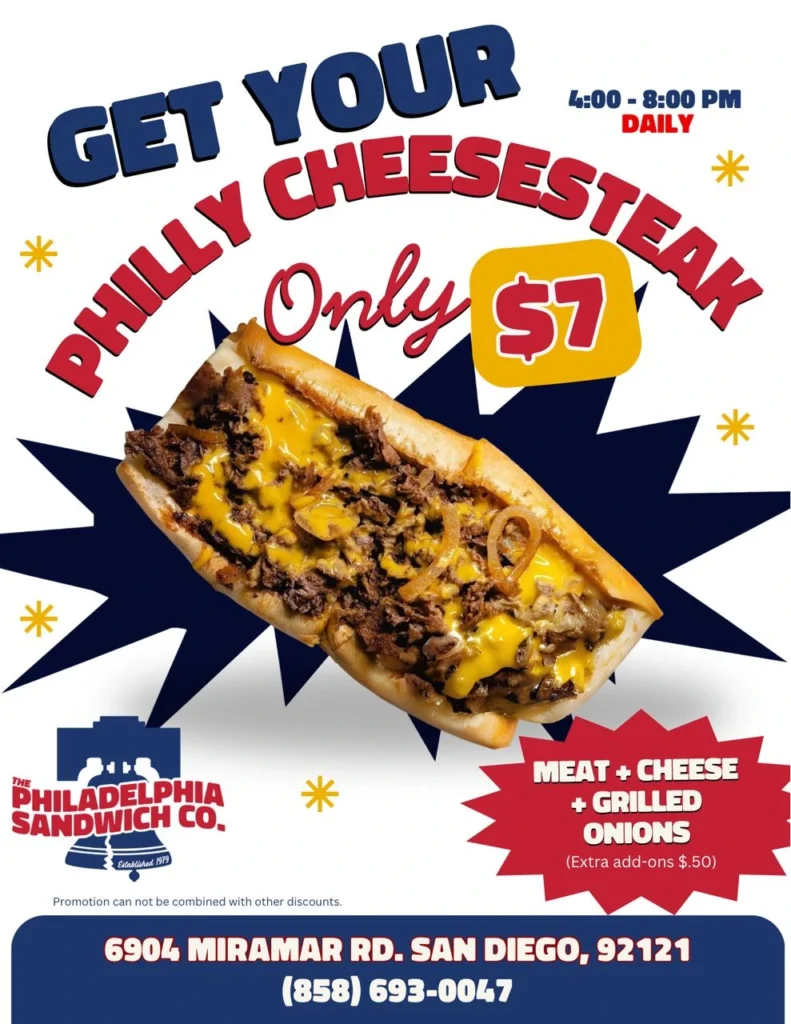
Monday - Saturday 4-8pm $7 cheesesteaks view
Details


If you want the cheesesteak flavor profile at home but don’t have thin-sliced ribeye on hand, a ground beef Philly cheesesteak is one of the most practical ways to get close. This version replaces chopped ribeye with properly browned 80/20 ground beef, softened onions, and melted cheese, served on a soft hoagie roll. The texture is different from the classic flat-top ribeye sandwich, but the same principles still apply: high heat, controlled browning, minimal seasoning, and correct cheese integration.
At Philadelphia Sandwich Co. in San Diego, the traditional benchmark is still thin-sliced ribeye cooked on a hot flat top and finished with cheese melted directly into the meat. Ground beef is not the original method, but it can produce a cohesive, flavorful sandwich when it’s cooked with discipline instead of treated like a rushed skillet meal.
This guide explains what changes when you use ground beef, how to build the filling so it holds together, and which variations work best when you want cheesesteak-style flavor in formats like sliders, skillets, casseroles, and pasta dishes.
The reason most ground beef cheesesteak attempts fail is not the meat choice. It’s technique. Ground beef releases moisture quickly and can turn gray if the pan isn’t hot or if the meat is stirred too early. The goal is to brown first, then break the meat apart with intention, then bind it with cheese so the filling lifts as one unit.
San Diego has plenty of steak-and-cheese variations, but the original Philadelphia version is built around a flat top, thin-sliced ribeye, and cheese melted directly into the meat. That structure matters because ribeye creates its own richness through rendered fat and chopped strands that hold together naturally.
Ground beef changes the structure, so the cooking has to become more deliberate. If you want to compare the home-friendly version to the traditional sandwiches we serve daily, you can explore our lineup on the Official Menu.
A ground beef cheesesteak is not about adding extra ingredients to force similarity. It is about recreating the same mechanics that make a ribeye cheesesteak work: browned beef flavor, controlled moisture, and integrated cheese.
An 80/20 blend is the best baseline. It carries enough fat to stay moist once browned and mixed with cheese, but not so much that it leaves excess grease soaking into the roll. Leaner blends like 90/10 tend to cook dry and crumbly, and once that dryness sets in, cheese cannot fully restore the texture.
Heat is the difference-maker. When ground beef hits a properly heated surface, it should sizzle aggressively. Spread it out gently to maximize contact, then leave it alone for the first minute. If you stir immediately, moisture releases and the meat steams. Steam prevents browning. Browning is where depth develops.
Once the underside darkens and caramelized patches appear, break the meat into controlled crumbles. Not tiny grains and not large clumps. The goal is a chopped, liftable texture that can bind with cheese.
A wide cooking surface helps moisture escape quickly. A Blackstone-style griddle or a heavy cast-iron skillet works best. Avoid crowding. If necessary, cook in batches. Overcrowding traps steam and leads to gray meat instead of browned beef.
Onions should be cooked separately first. Thinly sliced yellow or white onions work best. Soften them until translucent and lightly sweet, then stop before deep caramelization so the filling stays savory and balanced.
Once the beef is properly browned, fold the onions into the mixture. The onion moisture blends with rendered fat and helps unify the filling without turning it wet.
Cheese plays a structural role in this version. Lay slices of white American or provolone over a compact mound of beef and onions and allow them to soften from residual heat. Once the edges relax, fold the beef inward and press gently. The cheese melts through the crumbles and binds them together.
Cheese Whiz can work too, but use it sparingly. Because ground beef lacks ribeye’s chopped strands, too much liquid cheese can make the filling overly soft. The objective is cohesion. When you scoop the mixture, it should move as one unit.
A ground beef version can still eat like a cheesesteak if you treat the sandwich like a system. The bread matters, distribution matters, and moisture control matters.
Whether you’re cooking at home or ordering from a shop, the same fundamentals define a great cheesesteak: beef flavor built through proper heat, onions softened without flooding the filling, and cheese melted into the meat for cohesion.
If your ground beef turned gray and bland, the surface wasn’t hot enough or the meat was stirred too soon. If the filling fell apart when lifted, the cheese wasn’t integrated properly. If the roll turned soggy, grease wasn’t managed and the sandwich was overfilled.
Most problems trace back to the same fix: higher heat, less stirring, controlled moisture, and proper cheese binding.
Ground beef versions work especially well when you need speed, flexibility, or an easy way to feed more people without sacrificing the core cheesesteak flavor profile.
The trade-off is simple. Ribeye provides chopped strands and traditional chew. Ground beef provides accessibility and versatility. Both can be satisfying when executed properly, but they deliver different eating experiences.
Yes. It is not traditional, but it can be cohesive and flavorful if you use high heat for browning, an 80/20 ratio, and integrate cheese to bind the filling.
An 80/20 blend is the best balance for moisture and flavor. Leaner blends tend to cook dry and crumbly.
White American and provolone bind well when melted into the beef. Cheese Whiz can be used sparingly, but too much can soften the filling excessively.
Most often it comes from excess grease, overcrowding the pan (steaming instead of browning), or using bread that is too dense or not pliable enough to compress cleanly.
Ground beef variations can be practical for home cooking, especially for sliders and quick skillet meals. But if you want the original flat-top experience that made the sandwich famous, ribeye remains the benchmark.
For over 40 years, The Philadelphia Sandwich Co. has prepared cheesesteaks the traditional way: thin-sliced ribeye cooked on a hot flat top, classic cheese melted directly into the meat, and authentic Amoroso rolls that hold flavor and moisture without falling apart. That commitment continues at our Miramar Road location in San Diego, where the details still matter.
Philadelphia Sandwich Co.
6904 Miramar Rd. Suite 207
San Diego, CA 92121
Phone: (858) 693-0047