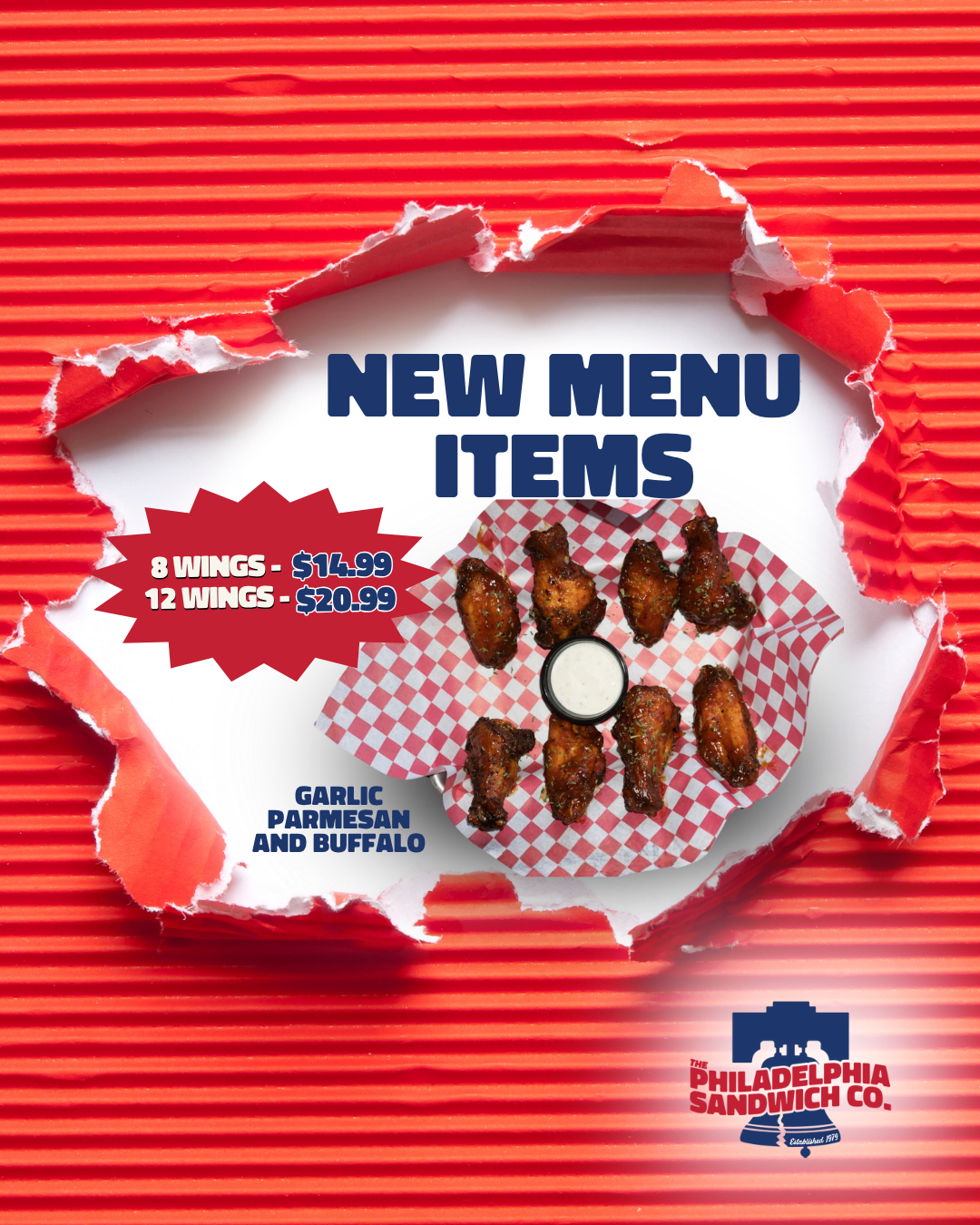
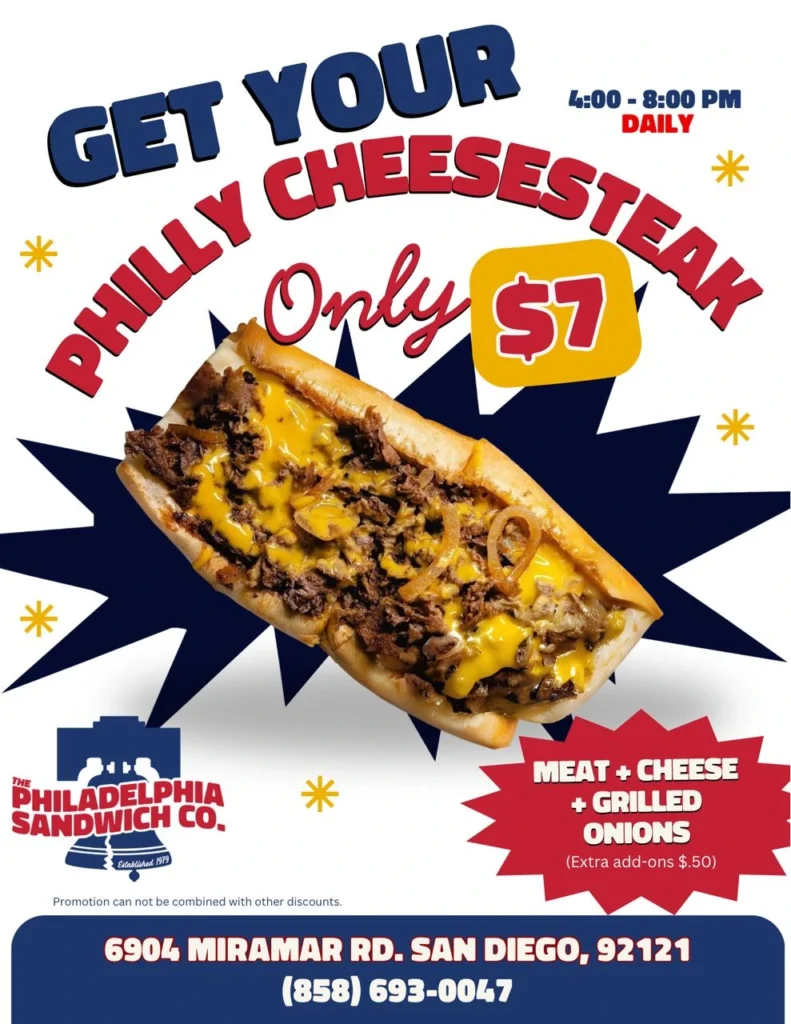
Order authentic Philly Cheesesteak with us! We offer catering & delivery! Please call: 858-693-0047 for orders!
Monday - Saturday 4-8pm $7 cheesesteaks view
Details


If you’ve ever ordered a cheesesteak outside Philadelphia, chances are someone asked an unexpected question: “What sauce do you want on it?” For many people across the country, cheesesteaks are served with aioli, marinara, ranch, or a ladle of cheese sauce. But when you step into a traditional Philadelphia sandwich shop, that question simply doesn’t exist.
In the classic version of the sandwich, a Philly cheesesteak doesn’t use a separate sauce at all. The flavor and moisture come directly from the ingredients themselves—thin-sliced ribeye steak cooked on a hot flat top, rendered beef fat, softened onions, and melted cheese integrated into the meat.
At Philadelphia Sandwich Co. in San Diego, we stay true to that original method. When the meat is seared correctly and the cheese melts into the chopped ribeye, the sandwich creates its own richness. Nothing needs to be poured on top or drizzled afterward.
That’s why the best answer to the common question “What sauce goes on a Philly cheesesteak?” is simple: none. The sandwich is already engineered to carry its own flavor.
A real cheesesteak is built like a system. Each ingredient has a role that contributes to the final texture and flavor of the sandwich.
When these fundamentals are handled correctly, the sandwich never reaches a point where someone needs to add a condiment to “finish” it.
San Diego has an incredible food culture, but authentic East Coast sandwiches can be difficult to find. Many places serve steak sandwiches with sauces and toppings that drift far from the original Philadelphia style.
At Philadelphia Sandwich Co., we stick to the traditional method that made the sandwich famous in the first place. That means thin-sliced ribeye cooked on a hot grill, onions softened beside the meat, and cheese melted directly into the filling.
If you want to explore the classic lineup of sandwiches we serve daily, take a look at our Official Menu.
If there is any element in a cheesesteak that behaves like a “sauce,” it’s the melted cheese itself. But even then, the cheese is not poured on top—it’s integrated directly into the meat while everything is still hot.
Ribeye is the traditional cut used for cheesesteaks because it carries intramuscular fat. When it hits a hot flat top, the surface browns quickly and the fat begins to render. That rendered fat coats the chopped meat and produces the deep beef flavor that defines a real cheesesteak.
Onions cook beside the steak and slowly soften in the heat. Their natural sugars caramelize slightly, adding sweetness and aroma without introducing extra liquid into the filling.
In Philadelphia, the classic choices are Cheez Whiz, white American, or provolone. The cheese is placed directly over the cooked meat, allowed to soften, then folded and chopped into the ribeye. When done correctly, the cheese binds the filling into one cohesive mixture.
That integration replaces the need for any external sauce.
Once additional sauce enters the equation, the architecture of the sandwich changes.
A well-made cheesesteak roll is designed to absorb the natural fat from the meat and the melted cheese. When large amounts of sauce are introduced, that balance breaks down.
Too much liquid can cause the roll to weaken, spill, or collapse. Heavy sauces can also separate when reheated, leaving grease at the bottom and diluted flavor throughout the filling.
That doesn’t mean sauce-based versions are necessarily bad—it simply means they are no longer the original cheesesteak structure.
Outside Philadelphia, many recipes rely on cheese sauces or condiments for a practical reason: the cooking method has changed.
Modern versions often use ground beef, slow-cooked meat, or large batch preparations. Without the natural fat rendering that happens on a flat top, the filling can become dry or loose.
In those formats, sauce acts as a binder.
Examples include:
In those dishes, sauce helps hold the ingredients together and restore moisture that would normally come from ribeye fat.
If you want a cheesesteak to taste the way it does in Philadelphia, technique matters more than condiments.
When these fundamentals are correct, the sandwich stays juicy without relying on extra toppings.
At Philadelphia Sandwich Co., we prepare cheesesteaks the way they have been served in Philadelphia for decades.
This commitment to authentic preparation is why so many San Diego locals consider our shop one of the closest experiences to a true Philadelphia cheesesteak outside the East Coast.
Traditionally, none beyond melted cheese integrated directly into the chopped ribeye.
Modern cheese sauce recipes usually combine butter, flour, milk, and mild cheeses like provolone or white American.
You can, but it is not traditional. Mayo introduces cold fat that changes the sandwich’s balance.
If you’re using one, a mild cheese sauce applied lightly is the most compatible. Traditional cheesesteaks rely on melted cheese integrated into the meat instead.
For more than four decades, Philadelphia Sandwich Co. has brought the flavors of South Philadelphia to Southern California. Our cheesesteaks follow the traditional formula: thin-sliced ribeye cooked on a hot flat top, onions softened beside the meat, and cheese melted directly into the filling.
When the sandwich is built the right way, it carries its own richness—no bottled sauces required.
Philadelphia Sandwich Co.
6904 Miramar Rd. Suite 207
San Diego, CA
Phone: (858) 693-0047
Real Philly sandwiches. Authentic ingredients. A San Diego favorite.