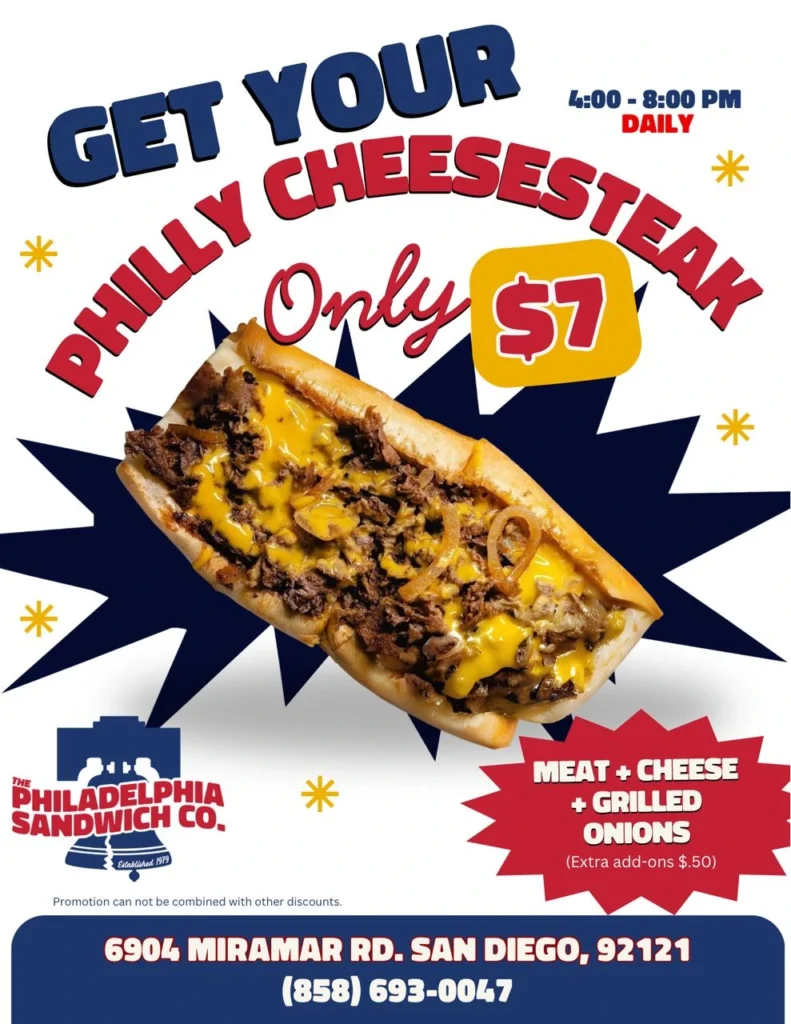
Order authentic Philly Cheesesteak with us! We offer catering & delivery! Please call: 858-693-0047 for orders!


The best meat for a Philly cheesesteak is thinly sliced ribeye steak because its marbling keeps the beef tender, juicy, and flavorful when cooked quickly on a flat-top grill. While sirloin, flank, flat iron, and top round can be used as substitutes, ribeye is the traditional and most authentic choice for classic Philadelphia-style texture and taste.
Few American sandwiches carry the cultural identity of the Philly cheesesteak. Cheese matters, the hoagie roll matters, and onions matter—but the defining element of authenticity is the beef. The cut you choose determines whether the sandwich eats like a true Philly cheesesteak (soft, chopped, cohesive) or like a steak sandwich with melted cheese on top.
When people search “best meat for Philly cheesesteak” or “what cut of beef is used in a real Philly cheesesteak,” they’re usually trying to solve a very practical problem: which meat produces that tender, melt-together texture you get from the best East Coast shops. The answer starts with ribeye, but the full story includes marbling, slicing precision, heat, and why some restaurants choose alternatives.
At Philadelphia Sandwich Co in San Diego, we prepare cheesesteaks using classic East Coast technique where meat quality and slicing precision are the foundation of every sandwich. Located near Miramar Road, we serve guests across Sorrento Valley, La Jolla, Carmel Valley, Torrey Pines, Mira Mesa, University City, Del Mar, and Rancho Peñasquitos, and one of the most common questions we hear is whether our cheesesteaks follow the traditional ribeye standard. That question matters, because the meat truly defines the experience.
Cheesesteaks were built for speed. Early Philly-style cheesesteaks were cooked on flat-top grills in busy lunch-counter settings, where meat had to cook fast, stay tender, and taste rich without complicated seasoning. Ribeye naturally became the preferred cut because it performed better than leaner steaks in that high-heat, quick-cook environment.
That legacy continues today. A “real Philly” experience is closely tied to ribeye, not because of hype, but because it consistently delivers the texture and richness people expect.
Ribeye wins for one reason: marbling. Marbling is intramuscular fat distributed through the meat rather than sitting only on the outside. When ribeye hits a hot flat-top grill, that fat renders quickly and coats the thin slices as they cook. That rendering protects the meat from drying out and produces the juicy, tender bite associated with authentic cheesesteaks.
There’s also a mechanical advantage. Cheesesteak meat is chopped and folded on the grill. Ribeye stays soft while being chopped, and it maintains a cohesive texture when combined with melted cheese. Leaner cuts can tighten up as they cook, which makes them harder to chop into the classic small, tender pieces that define the sandwich.
A useful way to think about it is this: ribeye doesn’t just taste better—it behaves better under high heat. Cheesesteaks are a high-heat sandwich, and ribeye is the cut that’s built for it.
A cheesesteak isn’t supposed to feel like steak strips stuffed into bread. The classic bite feels unified—beef and cheese acting as one filling rather than separate layers. Ribeye helps create that cohesion because rendered fat improves mouthfeel and allows cheese to integrate more smoothly into the chopped meat.
That’s also why ribeye tends to feel richer even with the same cheese. The fat carries flavor and helps the sandwich feel “complete” without heavy seasoning. This is one reason why authentic Philly cheesesteaks often use minimal spice: the beef already has the richness.
Even the best ribeye can fail if sliced wrong. Authentic cheesesteak meat is sliced paper-thin, often while partially frozen to maintain uniformity. Thin slices cook rapidly and evenly, allowing quick browning without overcooking. They also make the signature chopped texture possible.
Slicing against the grain is equally important, especially for alternative cuts. Cutting against the grain shortens muscle fibers, which makes each bite feel tender rather than chewy. If someone says a cheesesteak feels tough or “steak-y,” the most common cause is thick slicing or slicing with the grain.
In traditional Philadelphia kitchens, slicing technique is treated as seriously as the cut itself. That’s why ribeye plus proper slicing remains the gold standard.
| Cut | Tenderness on Flat-Top | Fat / Marbling | Authenticity Level | Best Use Case |
|---|---|---|---|---|
| Ribeye | Very high (forgiving, stays juicy) | High | Traditional / Gold standard | Authentic Philly-style cheesesteaks |
| Sirloin | Moderate (can dry if overcooked) | Low–medium | Secondary option | Leaner cheesesteak if sliced ultra-thin |
| Flank | Moderate (can turn chewy) | Low | Non-traditional | Strong beef flavor; needs careful slicing |
| Flat iron | Moderate–high (good value) | Medium | Less traditional | Budget-friendly option with decent tenderness |
| Top round | Low–moderate (dries easily) | Low | Rare in Philly shops | Only if sliced extremely thin and cooked fast |
| Factor | Ribeye | Sirloin |
|---|---|---|
| Marbling | High | Low–medium |
| Juiciness | Very high | Moderate |
| Forgiveness Under High Heat | High | Lower |
| Classic Philly Texture | Easier to achieve | Requires perfect slicing + timing |
Ribeye is a premium cut and its price can fluctuate. In high-volume restaurants, food cost stability matters, so some places use leaner cuts to control margins or maintain consistent pricing. That choice doesn’t automatically make a cheesesteak “bad,” but it often changes the eating experience.
Less marbling typically means less richness and a higher risk of dryness if the meat is slightly overcooked. This is why two cheesesteaks can look similar and taste completely different. Often, the difference is simply the cut.
One of the biggest mistakes in cheesesteak preparation is using pre-cooked deli roast beef. Cheesesteaks are meant to be cooked fresh on the grill so the meat can sear and develop browned flavor compounds. Pre-cooked beef lacks that fresh caramelization, and reheating it cannot recreate the same texture or depth.
Authentic cheesesteaks are cooked to order. That’s part of the identity of the sandwich.
If you’ve ever made a cheesesteak at home and ended up with chewy meat, it usually comes down to technique rather than “wrong seasoning.” Thick slicing is the most common cause. The second most common issue is slicing with the grain instead of against it.
Using a very lean cut can also lead to toughness, especially if the cook time runs too long. And if the pan or grill isn’t hot enough, the meat steams rather than sears. Steamed beef feels firmer and lacks the rich browned flavor that makes cheesesteaks taste authentic.
Authentic cheesesteaks are cooked on a flat-top grill. The wide surface area allows thin meat to spread out, sear quickly, and be chopped and folded as it cooks. That chopping creates many small pieces that trap cheese, producing the classic cohesive filling.
At home, cast iron can work well, but it’s easy to overcrowd the pan. Overcrowding traps moisture and leads to steaming. Cooking in smaller batches and keeping the heat high helps replicate the flat-top effect.
At Philadelphia Sandwich Co in San Diego, we cook cheesesteaks fresh on a flat-top to preserve tenderness and classic Philly flavor.
Chicken cheesesteaks are popular across the country and can be delicious. However, from a traditional standpoint, beef ribeye defines the original Philly cheesesteak. Chicken and pork versions are adaptations rather than the classic form.
Understanding the difference helps keep “Philly cheesesteak” meaningfully tied to its roots.
Philadelphia Sandwich Co brings authentic East Coast cheesesteak preparation to San Diego with a focus on ribeye, precise slicing, and high-heat flat-top cooking. Located near Miramar Road, we serve guests from Sorrento Valley, La Jolla, Carmel Valley, Torrey Pines, Mira Mesa, University City, Del Mar, and Rancho Peñasquitos.
Many guests ask one key question before ordering: what meat do you use? The answer matters because the best cheesesteaks start with the right beef, and ribeye remains the defining standard of a traditional Philadelphia-style cheesesteak.
What cut of beef is used in a real Philly cheesesteak?
Thinly sliced ribeye steak cooked quickly on a flat-top grill.
Is shaved steak the same as ribeye?
Not necessarily. “Shaved steak” refers to thickness, not the specific cut.
Why don’t authentic Philly cheesesteaks use ground beef?
Ground beef changes texture and moisture behavior. Cheesesteaks rely on thin slices that sear and fold into a cohesive filling.
Can I use pre-sliced grocery store steak?
You can, but quality and cut vary. If it’s from a lean cut, you’ll need careful heat control to avoid dryness.
Why do some cheesesteaks taste dry?
Lean cuts, thick slicing, low heat, or overcooking are common causes. Ribeye and fast flat-top cooking reduce dryness.
If authenticity, tenderness, and rich flavor are the goal, ribeye steak is unquestionably the best meat for a Philly cheesesteak. Its marbling keeps it juicy under high heat, its texture supports paper-thin slicing, and its fat content blends beautifully with melted cheese.
Alternatives like sirloin, flank, flat iron, or top round can work in certain situations, especially for cost control or leaner preferences, but ribeye remains the gold standard of a true Philadelphia-style cheesesteak.
At Philadelphia Sandwich Co in San Diego, we stay committed to those principles—because when it comes to cheesesteaks, the meat makes the sandwich.